Showing posts with label science. Show all posts

Thursday, November 10, 2011

Otters!


We read all about otters and then we played the narration game. We go around the table from youngest to oldest (including Mom) and share a fact that we remember from our reading. Here is what we came up with for otters- I think we went around the table four times.

Otters have air in their fur to keep their skin dry.
Otters use a rock to break open their food.
They use their stomachs to carry food and their babies.
Their home is called a holt.
Sea otters wrap themselves in kelp when they sleep so they don't float out to sea.
Otters like to play.
Their babies can float then they are born but they cannot swim.
A Romp is an otter clan.
Freshwater otter's babies stay in the holt for several months.
There are many kinds of otters- like freshwater and saltwater.
A long time ago, an explorer crashed and survived by killing otters and discovered that their fur was very warm.
In South America, there are otters that can grow up to six feet.
Otters are carnivorous.
Otters are one of the few animals that use tools.
Otter skins, at one time, were worth a lot of money.
Otter skins were very popular in China.
Otters were on the endangered species list.
Otters really like kelp forests because of all the different types of animals that hide there that they can eat.
Otters are in the mustelidae family.

Then we met some friends at the Boonshoft to play and the observe the otters. It was really fun because we came at feeding time so we saw lots of action. There are three otters at the Boonshoft and their names are: Glider, Diver and Slider.


Monday, October 4, 2010

Electronics

We have been meeting with other homeschoolers on Tuesday afternoons. So far, the kids have spent a great deal of time taking apart broken electronics and seeing what they can learn about how things work. One of the dads came and taught them a simple way to make a LED (he is an electrical engineer). Below you can see the drawing that he used to explain his thoughts.

Working together....

Friday, March 19, 2010

Archimedes Day


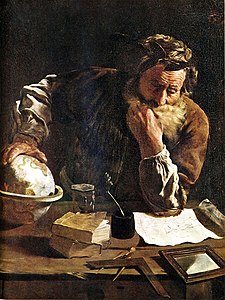
Achimedes Thoughtful by Fetti

Give me a place to stand on, and I will move the Earth.
Reportedly said by Archimedes concerning the use of levers


We had some science fun this week. Caleb is reading Archimedes and the Door to Science by Jeanne Bendick and the younger ones were reading Achimedes Takes a Bath by Joan Lexau. Archimedes was a Greek scientist and mathematician. He lived in the city of Syracuse on the island of Sicily in the 3rd century before Christ. Archimedes wrote about many scientific and mathematical principles- physics (buoyancy, simple machines) and geometry, just to name a few.

First, we watched a short clip from Brainpop.com about buoyancy and then we all went around the house and picked out five small objects. We made a chart in our science notebook and predicted whether each object would sink or float. Then we recorded the actual outcome. Next, we made generalizations about what types of materials float and also the shapes that were more likely to float. We also looked here to see the principle of water displacement, among other things.

Next, we watched a few clips from Brainpop (we love it!) about simple machines- there are five: the lever, pulley, wheel, axle and incline plane. Although Archimedes did not invent any of these, he was the first to write extensively about the principles involved. He also used many in his inventions; several of which were reportedly used to defend the city of Syracuse when it was attacked by the Romans. Next, the boys went around the house looking for examples of levers. In case you didn't know, (I didn't) there are three classes of levers. Some of the examples of levers that we found were a playmobil catapult, a pair of tweezers, a wheelbarrow.... (well, we couldn't actually find our playmobil one but we talked about how it is a good example of a second class lever). And Adam demonstrated how to make a catapult out of Lincoln logs. Then we found out that if you move the fulcrum closer to the end you get a lot more distance. Let's just hope that he does not apply this principle at the dinner table. Ahem. Lastly, they made a drawing for their science notebook that included at least one example of each of the five simple machines. Here is Caleb's drawing:


I think what made this so much fun is that I previously knew very little about this area of science. So, we were all learning together which makes for a good day!